


What is Gooseberry Extract Powder?
Gooseberry Extract Powder is derived from carefully selected fruits of Phyllanthus emblica (also known as Amla or Indian Gooseberry), a botanical widely recognized for its exceptional nutritional density and long-standing use in traditional wellness systems.
What sets gooseberry apart from many other plant extracts is its naturally high concentration of vitamin C, polyphenols, and tannins, which together create a powerful antioxidant matrix. Unlike isolated nutrients, this synergistic composition provides enhanced stability and functional versatility in modern formulations.
Our extract is produced using controlled extraction and drying processes to preserve sensitive compounds while ensuring consistent quality, high solubility, and excellent processability for industrial applications.

COA
|
Item |
Specification |
Result |
Testing Method |
|
Botanical Identification |
Ribes uva-crispa (Gooseberry) |
Passed |
Microscopic analysis |
|
Appearance |
Fine powder, light brown/green color |
Greenish-brown |
Visual inspection |
|
Loss on Drying |
≤ 5% |
3.2% |
Oven drying at 105°C |
|
Ash Content |
≤ 5% |
4.0% |
Ashing method |
|
Vitamin C Content |
≥ 10% |
12.5% |
HPLC (High-Performance Liquid Chromatography) |
|
Heavy Metals |
Lead (Pb) ≤ 1 ppm; Arsenic (As) ≤ 1 ppm |
Lead: 0.5 ppm, Arsenic: 0.2 ppm |
ICP-MS (Inductively Coupled Plasma Mass Spectrometry) |
|
Microbial Limits |
Total Plate Count ≤ 1000 CFU/g |
50 CFU/g |
Plate count method |
|
Yeast and Mold ≤ 100 CFU/g |
10 CFU/g |
Plate count method |
|
|
E. coli Absent in 1g |
Absent |
PCR or Culture Method |
|
|
Staphylococcus aureus Absent in 1g |
Absent |
Culture Method |
|
|
Solubility |
Soluble in water |
Soluble |
Visual inspection |
|
Pesticide Residues |
< 0.05 ppm |
Not detected |
HPLC/GC-MS |
|
Microbial Contamination |
Total Plate Count ≤ 1000 CFU/g |
300 CFU/g |
Plate count method |
|
Solvents |
Ethanol < 1% |
0.5% |
HPLC |
Phytochemical Profile
Gooseberry extract contains a complex spectrum of bioactive compounds:
Vitamin C (Ascorbic Acid)
A naturally occurring antioxidant, often stabilized in gooseberry through association with tannins, improving its resistance to degradation.
Polyphenols
Including gallic acid and ellagic acid, which contribute to antioxidant capacity and overall functional value.
Tannins (Emblicanin A & B)
Unique compounds believed to support sustained antioxidant activity and improve stability compared to synthetic vitamin C.
Flavonoids
Support the overall bioactive profile and formulation positioning.
This combination creates a multi-layer antioxidant system, rather than a single isolated compound.
Functional Characteristics
Sustained Antioxidant Activity
Unlike synthetic ascorbic acid, gooseberry provides a gradual and prolonged antioxidant effect, attributed to its tannin-bound vitamin C structure.
Nutritional Density
Combines multiple micronutrients and plant compounds, making it suitable for holistic wellness formulations.
Oxidative Stability in Formulations
The presence of polyphenols helps protect sensitive compounds, making it valuable in complex product systems.
Application Insights
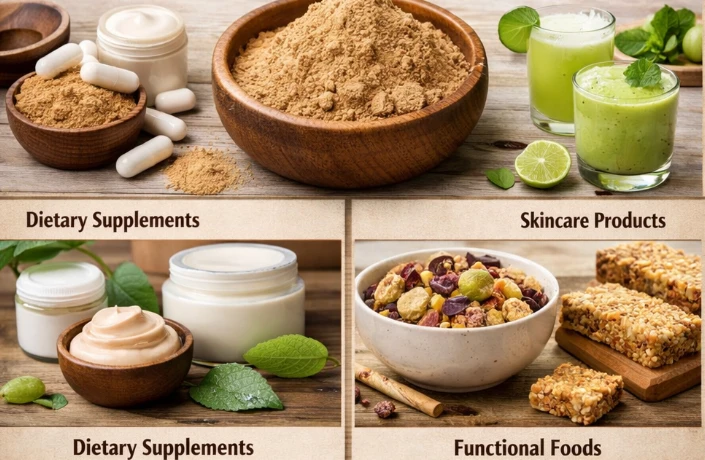
Nutraceutical Formulations
Gooseberry extract is commonly used in:
·Antioxidant blends
·Immune-support supplements
·Daily wellness formulas
Its balanced profile makes it suitable for both standalone products and multi-ingredient systems.
Functional Beverages
Due to its water solubility and mild fruity profile, it is ideal for:
·Instant drink powders
·Functional beverages
·Herbal nutrition drinks
Beauty-from-Within Products
Increasingly used in formulations targeting:
·Skin health positioning
·Anti-aging concepts
·Collagen-support blends
Formulation Advantages
·Water-soluble → easy integration into beverages
·Natural source of vitamin C → label-friendly
·Synergistic antioxidant system → enhanced positioning
·Compatible with a wide range of botanical and nutritional ingredients
Common Formulation Pairings
To maximize product positioning, gooseberry extract is often combined with:
·Collagen Peptides → beauty and skin support formulas
·Turmeric Extract (Curcumin) → antioxidant synergy
·Green Tea Extract → polyphenol-rich blends
·Zinc / Selenium → immune-focused formulations
Manufacturing Approach
·Selection of high-quality raw fruits
·Controlled extraction to preserve heat-sensitive nutrients
·Concentration under reduced pressure
·Spray drying into stable powder
Result:
·Improved stability of active compounds
·Consistent sensory and functional profile
Quality & Compliance
We provide:
·COA (Certificate of Analysis)
·MSDS
·Specification Sheet
·Heavy Metal & Microbial Reports
Produced under:
·GMP
·ISO quality system
Packaging & Supply
·1kg Aluminum Foil Bag
·25kg Fiber Drum
·OEM / Private Label available
MOQ: 1 kg
Bulk supply: Stable & scalable
Storage Recommendations
·Store in a cool, dry environment
·Protect from light and humidity
·Keep sealed to maintain antioxidant stability
FAQ
Q1: Is the vitamin C natural or synthetic?
It is naturally derived from gooseberry.
Q2: Is it suitable for beverages?
Yes, it is water soluble and widely used in drink formulations.
Q3: Can you standardize vitamin C content?
Yes, typically from 10% to 40%.
Q4: Does it have a strong taste?
It has a mild, slightly sour and fruity profile.
Q5: Do you provide samples?
Yes, samples are available upon request.
Where to buy Gooseberry Extract Powder?
Pure Biological provides high-quality Gooseberry Extract Powder, supports customer OEM customization, from samples to bulk goods, can respond quickly, and has a good service foundation.
Please contact us by email for more information.Email:sales@pureabio.com
Hot Tags: gooseberry extract powder, China gooseberry extract powder manufacturers, suppliers, factory, Sea Buckthorn Fruit Powder, fruit vegetable powder, Coconut Fruit Powder, Lemon Fruit Powder, Passion Fruit Juice Powder, Acai Berry Extract Powder Factory


